“These people must be in JAIL, for a long time”: Trump Repeats False ‘Rigged Election’ Claims and Calls for Prison

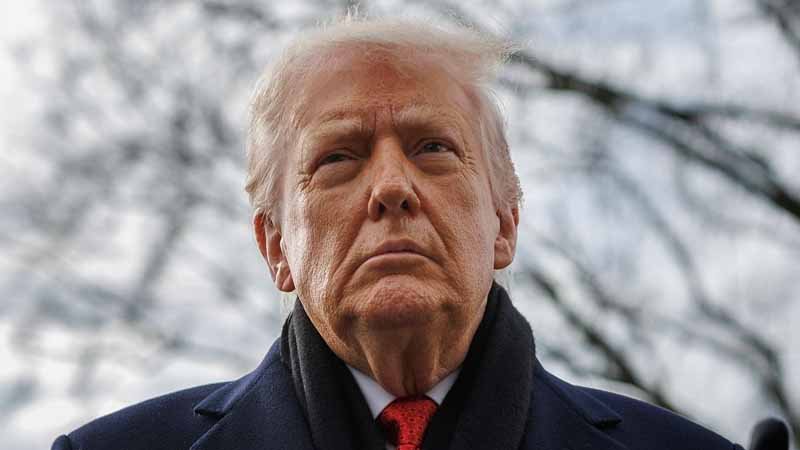
The President of the United States, Donald Trump, went back to an area that he is acquainted with on Tuesday, using social media to once again relitigate the presidential election of 2020 and to repeat accusations that have been refuted, namely that the campaign was “rigged.”
In a series of postings, the former president not only resurrected charges of massive voting fraud that had been disproved for a long time, but he also sought heavy punishment for those individuals whom he claimed were involved, asking for them to be imprisoned “for a long time.”
On the social networking site that Trump uses, Truth Social, he stated, “These individuals must be incarcerated for a considerable amount of time.” “The election was completely rigged!!!”
Despite the fact that dozens of court orders, recounts, audits, and certifications across numerous states affirmed President Joe Biden’s win in the 2020 election, Trump has publicly rejected the conclusion of the election.
The statements highlight yet another incident in which Trump has openly rejected the outcome of the election. Election authorities from both parties, as well as officials from Trump’s own administration who served in various capacities in the past, have declared on many occasions that there is no evidence of widespread fraud that could have influenced the outcome of the election.
Trump also included an image of a post that was first made on X by a right-wing influencer who goes by the name “Taya.” Trump posted this screenshot with his statements. The influencer, who has more than 148,000 followers, says that she is “proud” to be a “white, straight, Christian ICE supporter.” She also uses the phrase “proud” to describe herself.
A number of inaccurate assertions about the election in 2020 were bolstered by the post, with a particular focus on the voting process in Nevada. In the tweet that Trump posted, Taya made allegations that 42,000 people in Nevada voted more than once, that 1,500 people who had passed away cast votes, and that 4,000 illegal migrants participated in the election.
These assertions have been scrutinised on several occasions and shown to be false by both state authorities and independent investigators. Previous statements made by the authorities in charge of elections in Nevada have said that allegations of widespread double voting and voting by individuals who are not citizens are not substantiated by facts, and that precautions such as checks on voter registration and verification of signatures prevent abuses of this sort.
Despite this, it seemed as if Trump’s choice to enhance the role was a signal that he would continue to back their statements. For the second time, the former president has escalated conspiracy theories that have been circulating in pro-Trump groups ever since his defeat in 2020.
He did this by reposting the information without making any corrections whatsoever. His article did not present any proof to support the charges, nor did it accept the conclusions of courts or election officials who rejected similar claims many years ago. Neither of these things was done.
The message also included a request for the passing of the SAVE Act, which is a piece of legislation that was filed by Representative Chip Roy (R-Texas). In order to exercise their right to vote, the measure would mandate that all citizens of the United States provide evidence of their citizenship.
Critics of the measure argue that it could create significant barriers for eligible voters who may not have easy access to citizenship documents. These voters include elderly Americans, voters with low incomes, and married women whose legal names may not match older paperwork. Supporters of the measure argue that it would prevent non-citizens from participating in elections.
A number of times in the past, President Trump has voiced his support for more stringent voting procedures, including voter identification laws, arguing that these measures are essential to preserve “election integrity.” Opponents argue that such policies are often based on either exaggerated or erroneous allegations of voting fraud and that they have a disproportionately negative effect on communities of colour.
Over the course of many decades, several studies and investigations have continually come to the conclusion that voter fraud in elections held in the United States is very uncommon. The most recent remarks made by Trump come at a time when he is continuing to campaign on the idea that the Presidential election of 2020 was stolen from him.
This assertion has been an essential part of Trump’s political identity ever since he left office. A mob of Trump supporters stormed the United States Capitol on January 6, 2021, in an effort to obstruct the certification of Biden’s victory. Prosecutors and congressional investigators highlighted the mistaken assumption that the election was “rigged” as a crucial element in their investigation into the events that transpired on that day.
Even though a significant amount of time has passed, Trump has not shown any desire to move on from the matter. Instead, he usually uses campaign speeches and social media postings to relive past complaints, frequently targeting election officials, judges, and politicians who rejected his claims. He does this by using social media.
His demand that those who have not been identified be imprisoned reflects an increasingly combative tone, which critics argue undermines faith in democratic institutions and the rule of law. Experts in the field of law have observed that making allegations of criminal activity against large groups of individuals without providing proof may exacerbate political tensions and further polarise the voters.
In addition, they highlight the fact that demands to arrest political opponents or election managers are reminiscent of language that is more typically associated with authoritarian regimes than democratic ones. Despite this, Trump’s narrative continues to connect with a sizeable section of his supporters, many of whom continue to be persuaded that the election that took place in 2020 was a fraud.
It has been shown via polls that a significant proportion of Republican voters continue to hold the belief that Biden’s win was not genuine, highlighting the enduring significance of Trump’s assertions. Trump’s intensified attention on 2020 signals that the false narrative of a “rigged” election will continue to be a prominent feature of his political strategy.
This is because the election cycle in 2024 is becoming more intense. That the former president is not backing away from assertions that have been repeatedly disproven, nor from language that calls for heavy punishment based on those accusations, was brought to the attention of critics by the post that was published on Tuesday.
On the other hand, the tweet provided more support for Trump’s long-standing assertion that the election system in the United States is gravely broken. It is yet unclear if such assertions will have an impact on future policy discussions or whether they will further undermine trust in the democratic process in the United States, but Trump’s most recent statements make it very obvious that, in his opinion, the election in 2020 is not yet decided.
